PAVEL TAMM
← Back to Portfolio
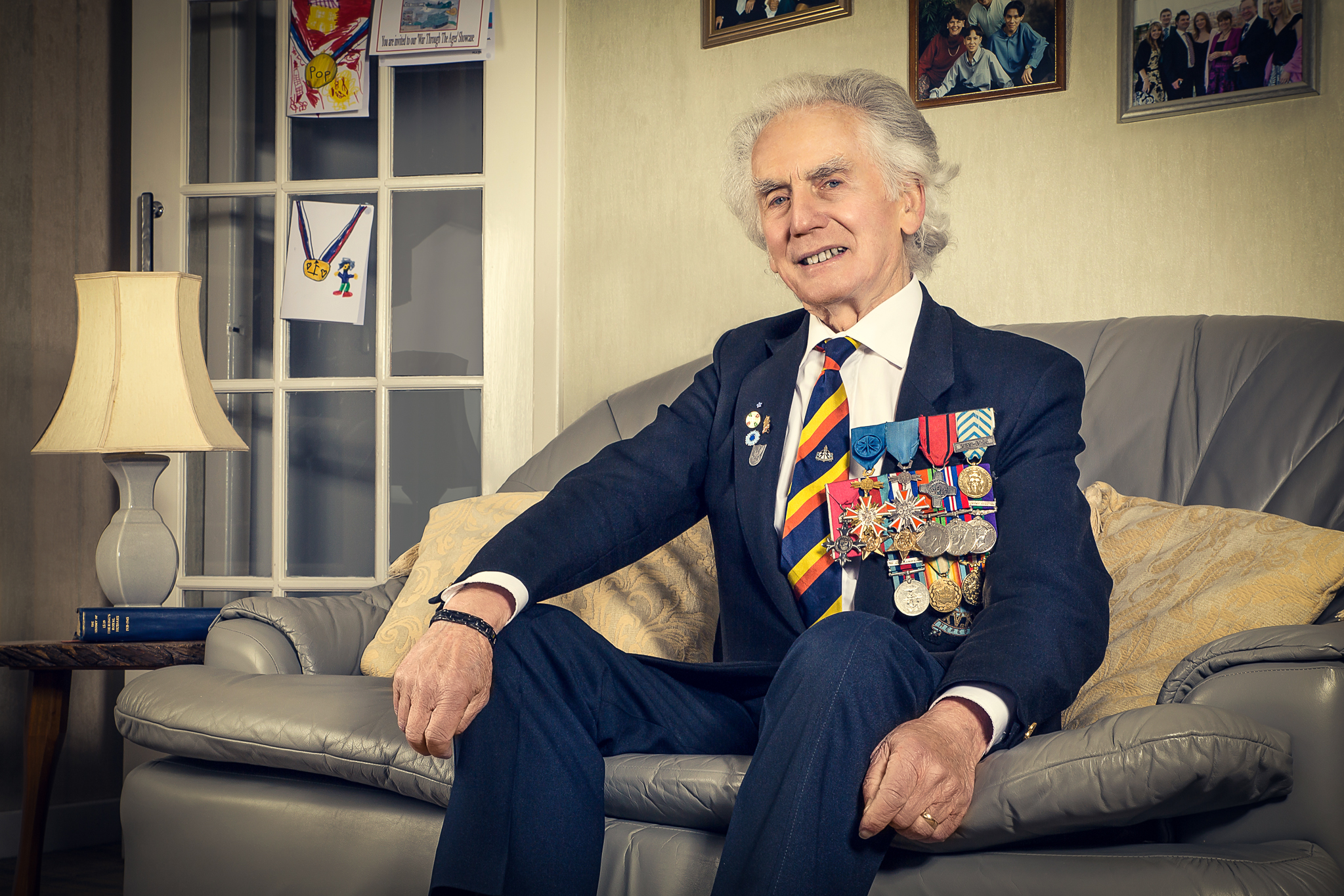
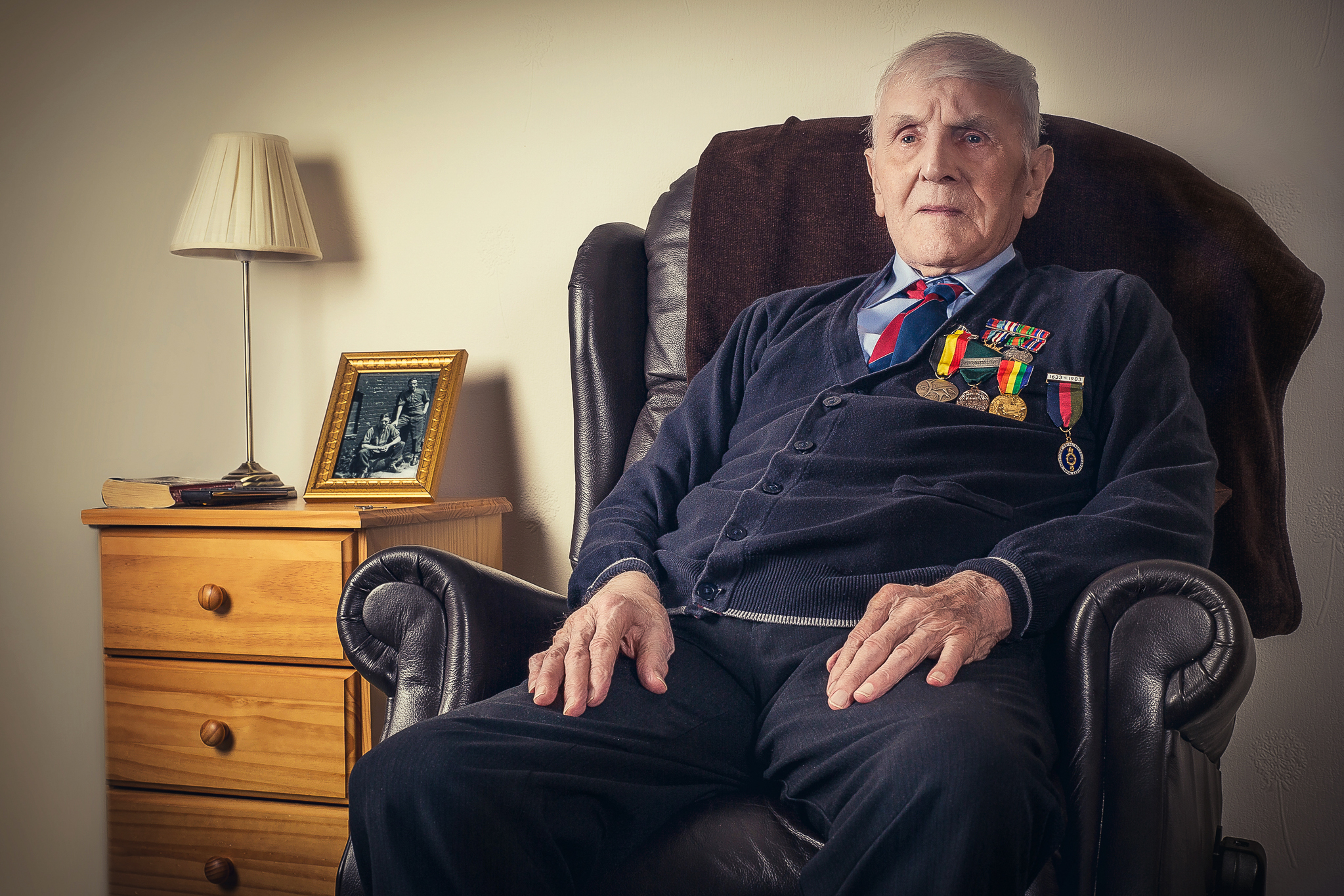
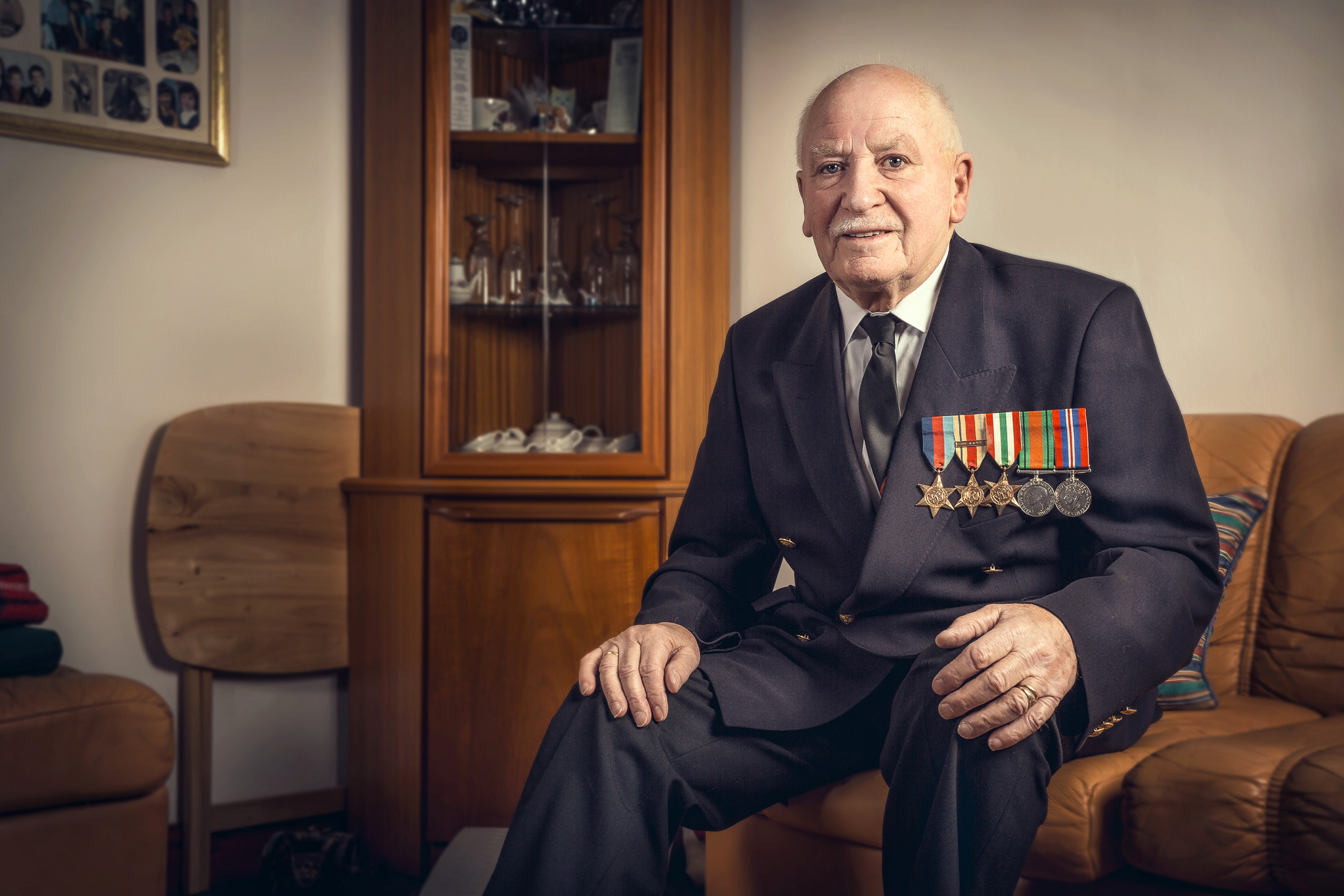
Portrait of Harry Klar, Scottish WW2 veteran, photographed in Livingston by Pavel Tamm
documentary · 2015–2016

Scottish Veterans of WW2

Documenting the men who fought for our freedom — photographed in their homes across Scotland

Location

Various locations across Scotland

Year

2015–2016

Category

documentary

Introduction

This project began in 2013 during my studies at Edinburgh College, inspired by Konstantin Suslov’s ongoing “WW2 Veterans” documentary work in London. I wanted to narrow the focus — to document specifically Scottish servicemen whose sacrifice and contribution helped guarantee our freedom.

What started as an academic project became something profoundly personal. I spent months making contact — placing adverts in local newspapers, reaching out to the Scottish Government, the Ministry of Defence, and Legion Scotland, who helped spread the word across the country. Eventually the responses started coming in, and the project was born.

The Approach

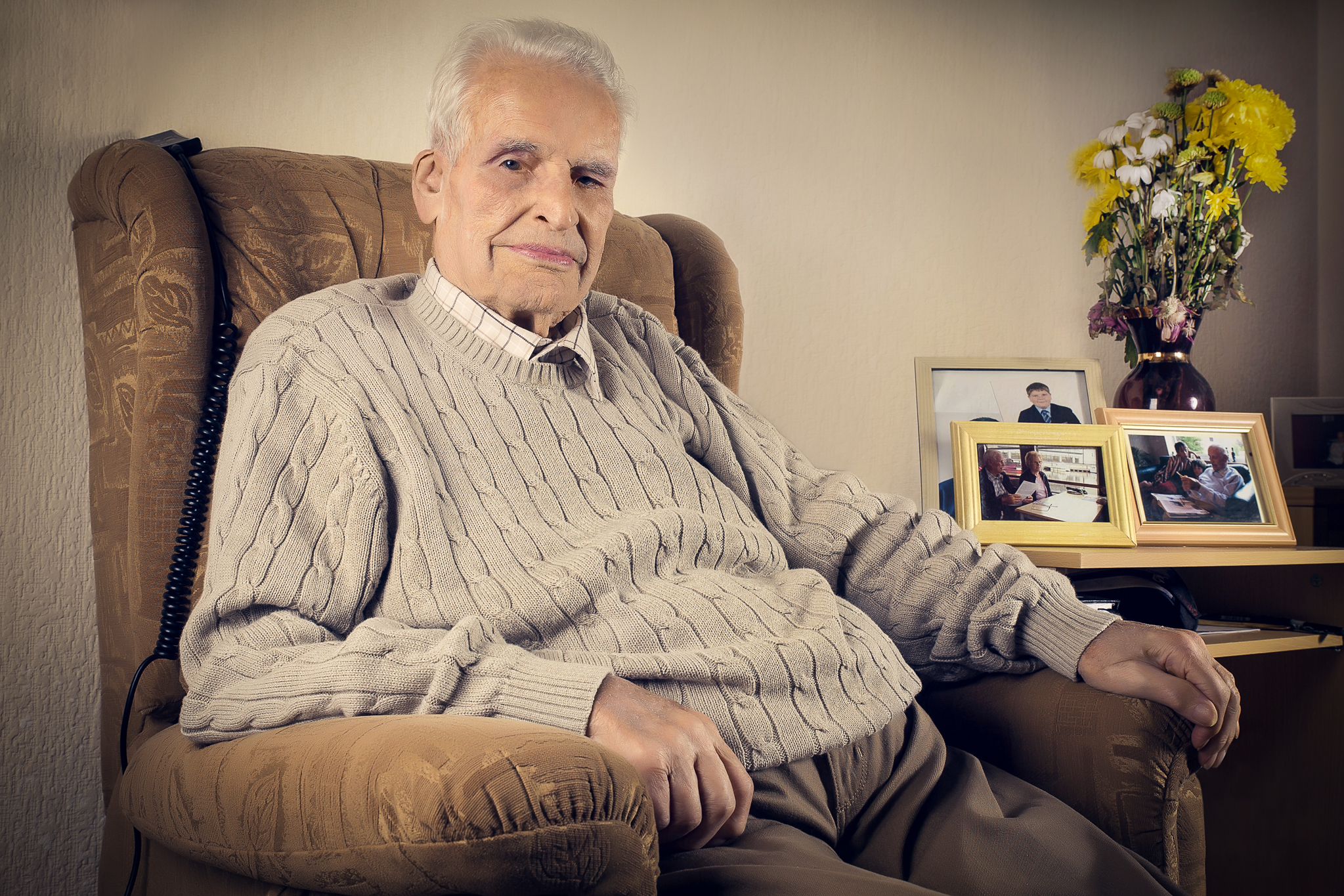
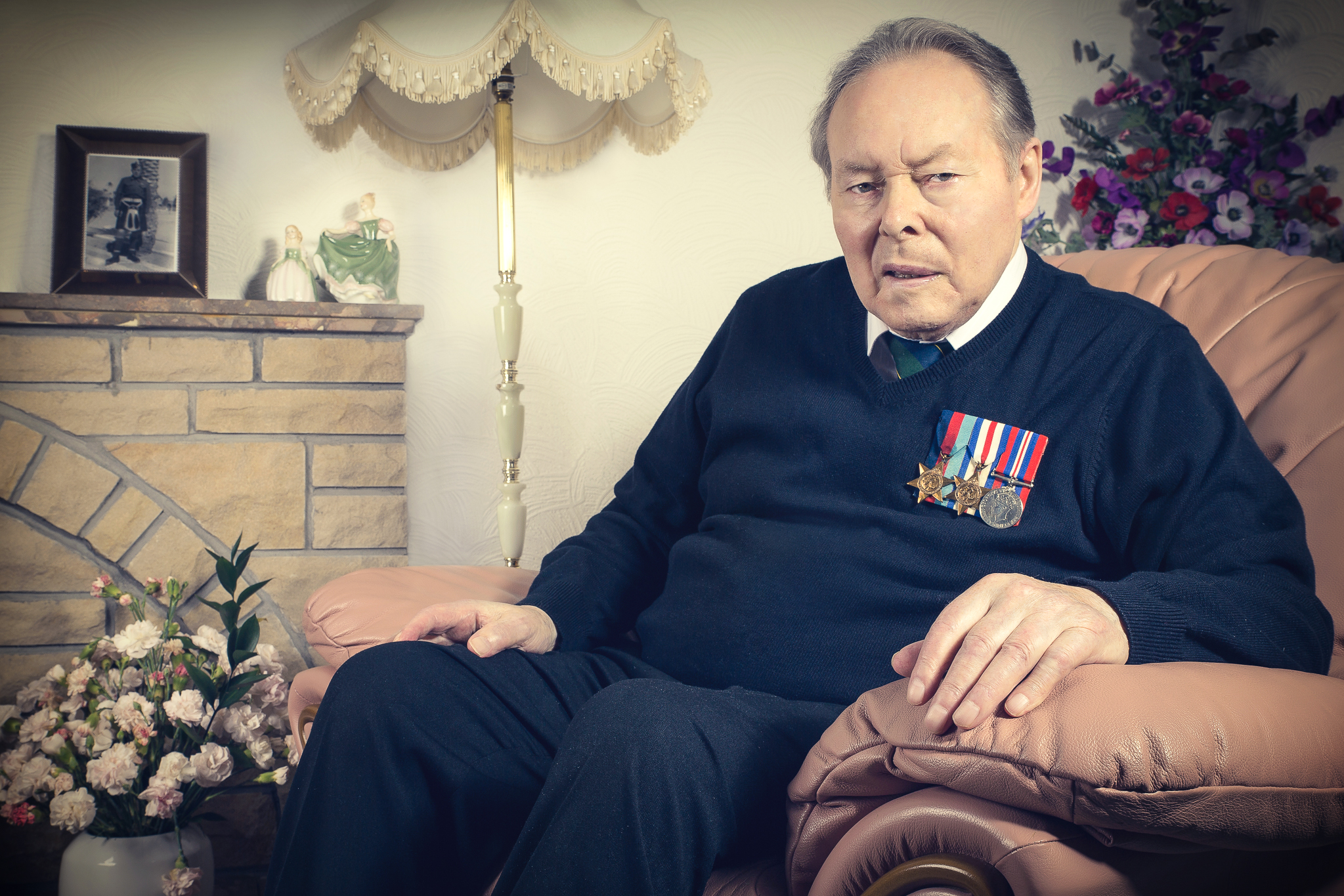
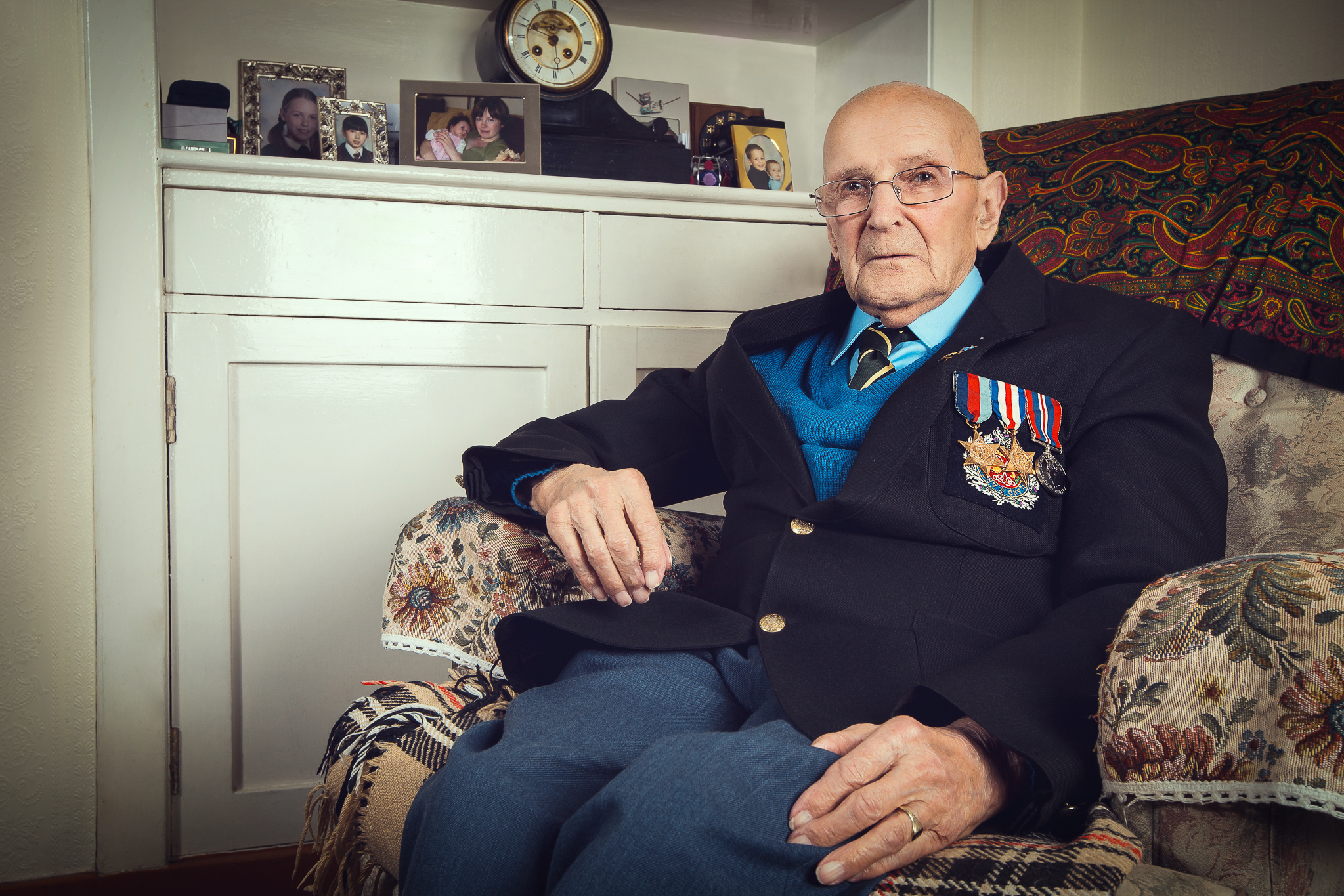
I travelled across Scotland to meet each veteran in their home. I wanted to photograph them in their own environment — surrounded by the objects, furniture, and quiet routines of their daily lives. This wasn’t about posed formality. It was about preserving who these men are today, alongside the pride they carry from their service decades ago.

Each visit began with conversation — at least an hour of listening before the camera came out. Over cups of tea, these men opened up. They showed me photographs, medals, and letters. They told stories that made me laugh and stories that made me sit in silence. The portrait emerged not from my direction, but from their willingness to be seen.

Technically, I worked with natural light from the windows of their homes, supplemented with portable lighting equipment where needed. The simplicity was deliberate — a camera, a few lenses, and a small reflector. Nothing between me and my subject. Just two people in a room, and the quiet work of making a photograph.

What I Learned

What struck me most was how many of these veterans felt overlooked. Several told me it was the first time in their long lives that someone had come specifically to listen to their story and take their portrait. That, more than any technical achievement, is what drives this project.

As one veteran told me: “Humanity always wanted to live in peace, however still not clever enough to learn the lessons from the previous mistakes.” It is sad, but pure truth.

I strongly believe these photographs speak for themselves — different men with different expressions, but all full of stories that are readable immediately in their eyes.

Recognition

The project was submitted to the British Institute of Professional Photography (BIPP) and contributed to my Associateship qualification (ABIPP) and the Peter Grugeon Award for Best Associateship in 2017. It has been featured on LensCulture, one of the world’s leading platforms for contemporary photography.
The Portraits

The Veterans

Ten Scottish servicemen, photographed in their homes. Each portrait tells the story of a life shaped by war and defined by quiet resilience.

Portrait of Harry Klar, Scottish WW2 veteran, photographed in Livingston by Pavel Tamm

Harry Klar

Livingston (born 1923)

Special Forces, British Army — African Tank Corps

Harry served with Special Forces within the British Army, fighting in the North African campaign including Tunisia. When the war began for him, he recalled that his main worry was not about where he would be sent — but that his mother would be left alone at home.

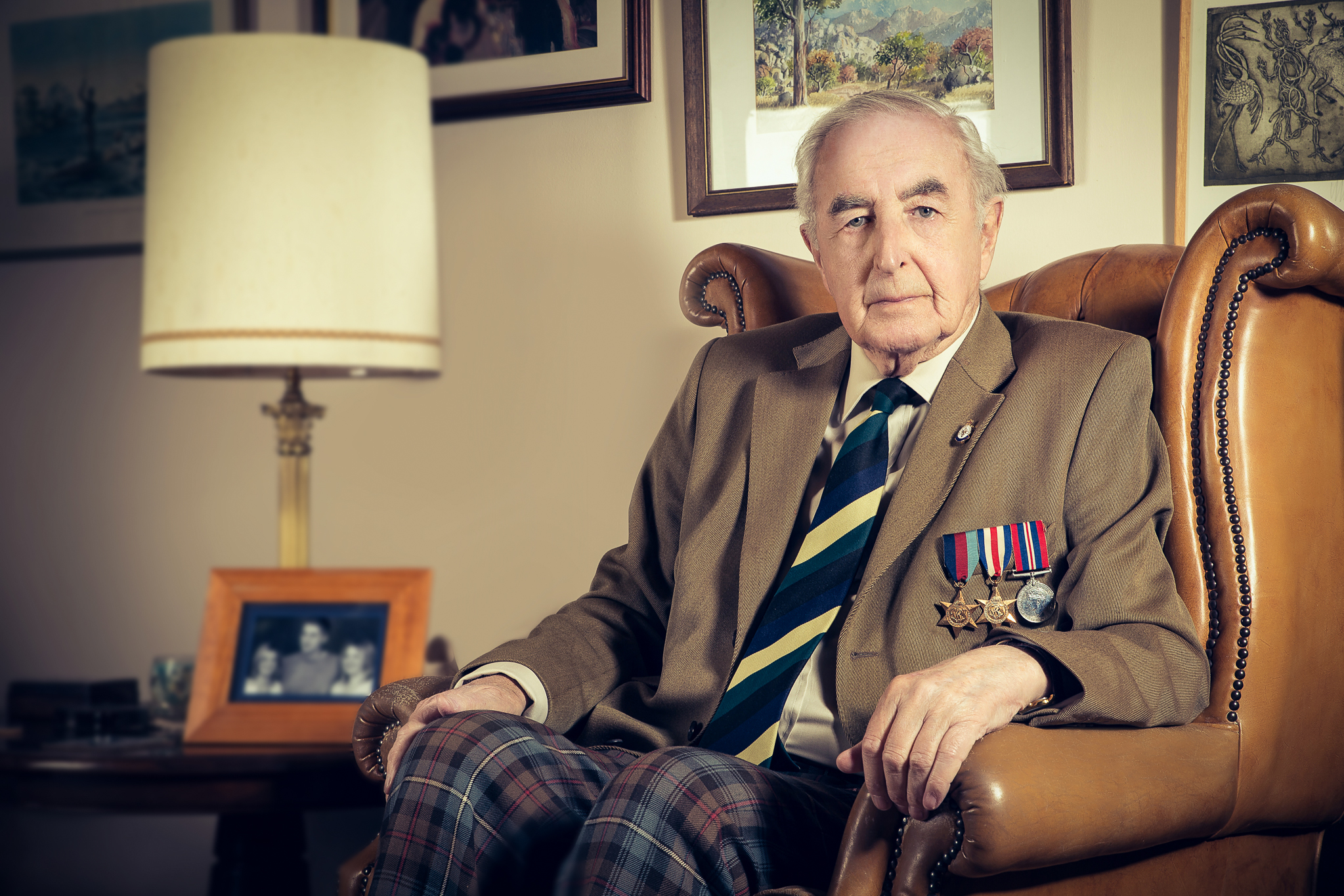
Portrait of James Keith, Scottish WW2 veteran, photographed in Anstruther by Pavel Tamm

James Keith

Anstruther

Argyll and Sutherland Highlanders — Radio Operator

James was called up in February 1944 and trained in Yorkshire as a radio operator. In October 1944 he was sent to Holland, fighting through to Germany where the war ended for him in Bremerhaven. He remained in Germany until Christmas before finally being demobilised and returning home.

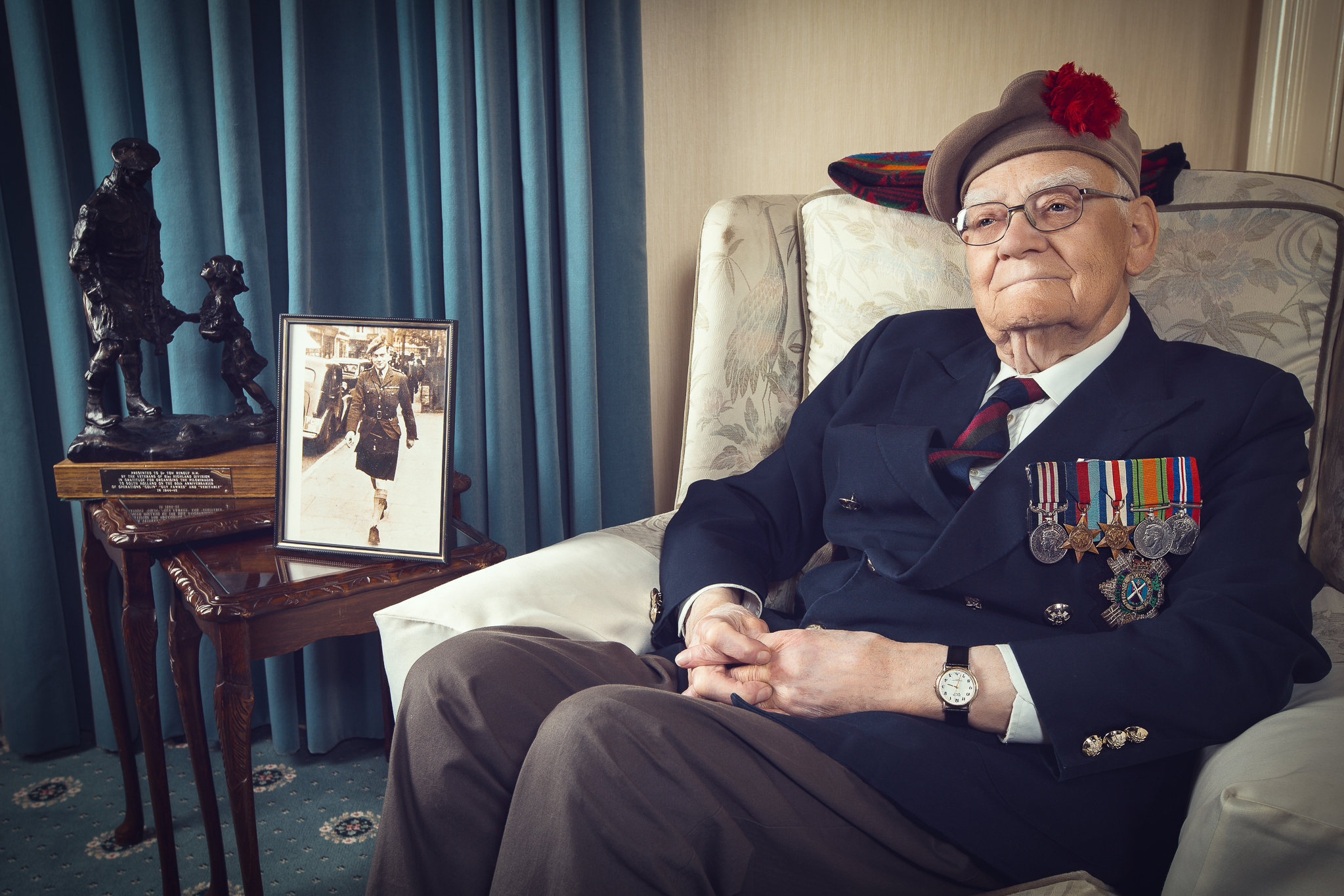
Portrait of Dr Tom Renouf MBE MM, Scottish WW2 veteran, photographed in Musselburgh by Pavel Tamm

Dr Tom Renouf MBE MM

Musselburgh (1925–2016)

5th Battalion, Black Watch (51st Highland Division)

Military Medal, Légion d'Honneur, MBE

Tom Renouf was born in Fisherrow, Musselburgh. He volunteered for service in 1943 and landed in Normandy on D-Day plus four. As a 19-year-old private, he was thrown into some of the most vicious fighting of the conflict — against Himmler's fanatical SS divisions. He fought through France, Holland, and the Ardennes in the bitter winter of 1944–45, and took part in the assault crossing of the Rhine, where he charged a Spandau machine gun nest armed with a Bren gun, earning the Military Medal.

After the war, Tom studied physics at Edinburgh University, earning a PhD in sub-atomic particle theory. He became a lecturer at the Royal Military College and a research fellow at Edinburgh University. For decades, he served as secretary of the 51st Highland Division Veterans Association, organising pilgrimages to Normandy, Holland, and Belgium for his fellow veterans.

In 2014 he received France's highest military honour, the Légion d'Honneur. His portrait was commissioned by HRH Prince Charles as part of "The Last of the Tide" — a collection of twelve D-Day veteran portraits displayed at Buckingham Palace and the Palace of Holyroodhouse. Two village squares in France have been named in his honour. He received his MBE in a bedside ceremony just days before his death in June 2016.

Tom published his memoirs in 2011 under the title Black Watch: Liberating Europe and Catching Himmler.

Portrait of Thomas Gibb, Scottish WW2 veteran, photographed in Grangemouth by Pavel Tamm

Thomas Gibb

Grangemouth (born 1916)

The Royal Scots, 8th Battalion

Thomas served with the 8th Battalion of The Royal Scots — one of Scotland's oldest and most distinguished regiments — through the later years of the war, from 1942 to 1946.

Portrait of John Wilson Tough, Scottish WW2 veteran, photographed in Forres by Pavel Tamm

John Wilson Tough

Forres (born 1926)

Gordon Highlanders

John's first real action came on 23 October 1944. His battalion was ordered to push the Germans back over the Maas River in preparation for the Rhine crossing. From there, the Gordon Highlanders moved rapidly to the Ardennes to support the Americans during the Battle of the Bulge — tough going through deep snow and bitter frost, with several casualties.

The Rhine crossing itself proved less difficult than expected, and from there it was a series of skirmishes until the war ended at Bremerhaven. After his portrait was taken, John wrote a letter thanking Pavel, adding: "I never thought of myself as a veteran. It was nice to have met you."

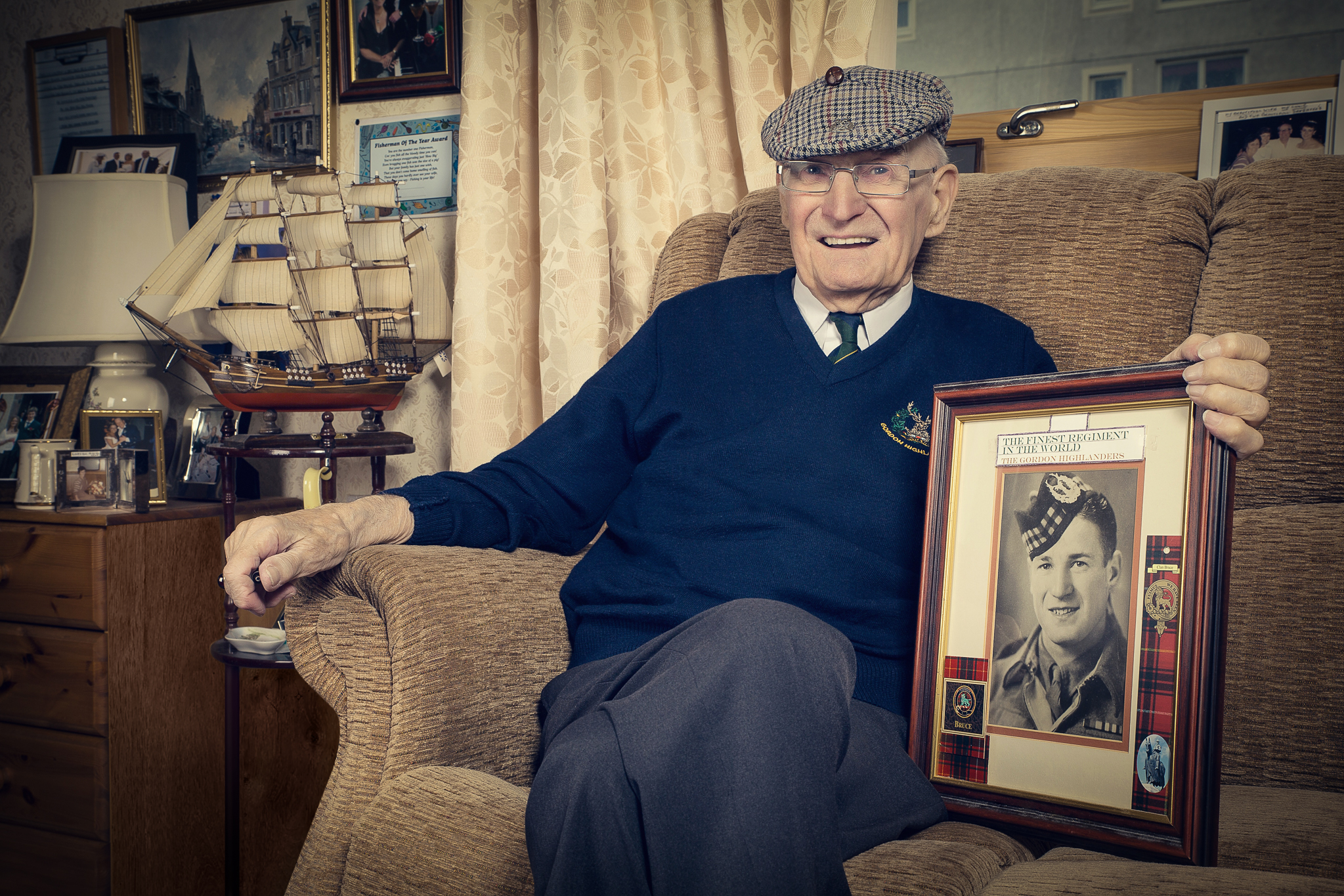
Portrait of Stanley Bruce, Scottish WW2 veteran, photographed in Aberdeen by Pavel Tamm

Stanley Bruce

Aberdeen (1925–2013)

5/7th Gordon Highlanders, 11th Platoon, B Company

Stanley was born in Torry, Aberdeen, and called up at eighteen. He joined the 5/7 Gordon Highlanders and was sent to invade Normandy. His company fought through France, Belgium, and Holland until they were ambushed — four of his friends were killed, and Stanley took two bullets in his leg. As he later put it with characteristic dry humour: "That was the day I ran the four-minute mile, before Roger Bannister."

He was flown home in a Dakota to a military hospital in Birmingham. After recovering, he returned to the front just in time to cross the Rhine at 21:00 hours on 23 March 1945. The war ended for him in Essen-Kray, and he was demobbed in 1947.

Portrait of Andrew Henery, Scottish WW2 veteran, photographed in Bishopbriggs by Pavel Tamm

Andrew Henery

Bishopbriggs (born 1919)

Royal Navy

Andrew served in the Royal Navy during the war and was part of the rescue effort at Dunkirk — one of the most remarkable military evacuations in history, when over 338,000 Allied soldiers were rescued from the beaches of northern France in 1940.

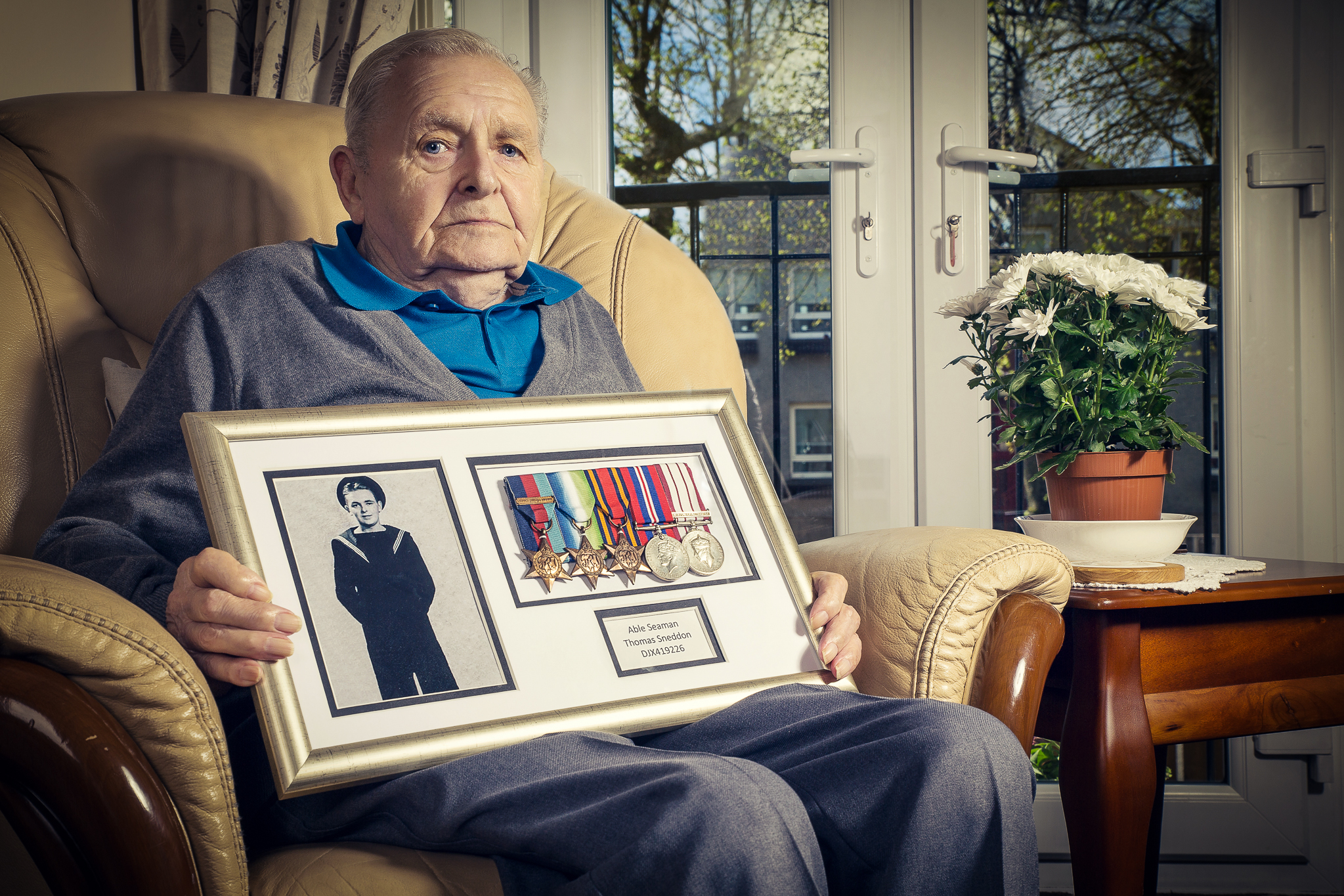
Portrait of Thomas Sneddon, Scottish WW2 veteran, photographed in Airdrie by Pavel Tamm

Thomas Sneddon

Airdrie (born 1925)

Royal Navy, HMS Pickle (Minesweeper)

Thomas was just fourteen when the war started. He worked in the Imperial shell shop making shells for the war effort. Three years later, at seventeen, he volunteered with the Royal Navy and celebrated his eighteenth birthday while training.

He was assigned to HMS Pickle, a minesweeper. The night before D-Day, HMS Pickle was one of the first ships on the route to France, sweeping the English Channel clear of mines for the invasion fleet to follow. They remained in the Channel for over a week, then took turns going out on patrol.

Portrait of William Balfour Robertson, Scottish WW2 veteran, photographed in North Berwick by Pavel Tamm

William Balfour Robertson

North Berwick (born 1926)

5/7th Gordon Highlanders, 13 Platoon, "C" Company, 153 Brigade, 51st Highland Division

Will fought in Holland, then in the Ardennes in Belgium, back to Holland, and then in the assault on the first German town of Goch and the Reichswald Forest.

His assault crossing of the Rhine took place south of Rees at 21:00 hours on 23 March 1945 — just four days after his nineteenth birthday. From there, his battalion pushed through Germany until the war ended on 5 May in Schiffdorf, outside Bremerhaven.

Decades later, Bill could still remember his rifle number: "EA 27883A."

Portrait of Ian Forsyth MBE, Scottish WW2 veteran, photographed in Hamilton by Pavel Tamm

Ian Forsyth MBE

Hamilton (1923–2021)

15th/19th King's Royal Hussars, Royal Armoured Corps

MBE, Points of Light Award

Ian Forsyth joined the army at seventeen as a wireless operator. On D-Day, he landed at Gold Beach aboard a Churchill tank with the 11th Armoured Division. He fought through France, Belgium, Holland, and over the Rhine into Germany. Three of his tanks were destroyed during the war, and he lost many comrades.

On 15 April 1945, Ian's tank — the lead tank that day — arrived at the gates of Bergen-Belsen concentration camp. His regiment was among the first British troops to reach the camp. The experience changed him forever.

After the war, Ian dedicated decades to Holocaust education, sharing his testimony at schools, with the Holocaust Educational Trust, and with the Holocaust Memorial Day Trust. In 2011, he was awarded the MBE for voluntary services to charity. He passed away in December 2021 at the age of 97.

Ian once said: "In war you witness first-hand the depths to which humanity can sink."

Gallery

The Portraits